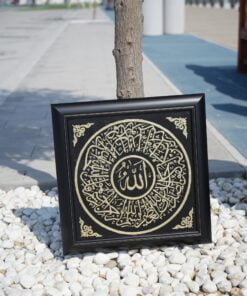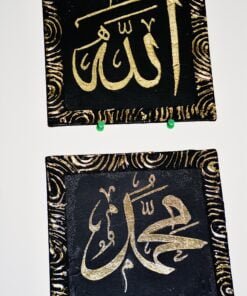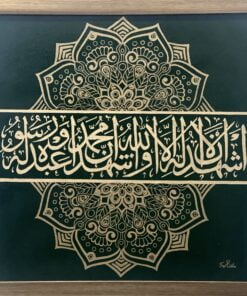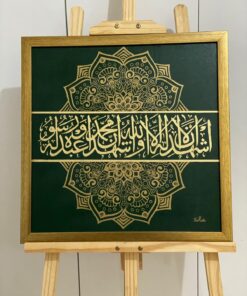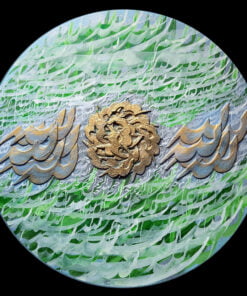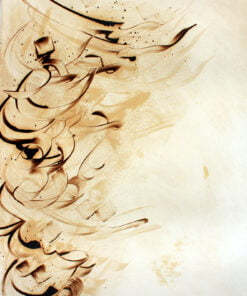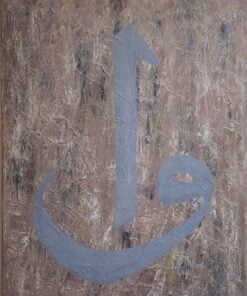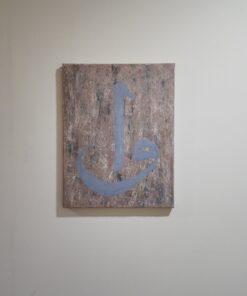

This A3 calligraphy painting is inspired by a recurring verse from Qur’an, Surah Ar-Rahman:
فَبِأَيِّ آلَاءِ رَبِّكُمَا تُكَذِّبَانِ
“Then which of your Lord’s blessings will you deny?”
While creating this piece, I was deeply reflecting on the questions often raised about faith — especially by those who deny the existence of God. A common question is: “If God exists, why does He not stop suffering? Why does He not save people in moments of pain?”
Through this artwork, I express a simple analogy.
Imagine you purchase a microwave oven. The company sends professionals to install it properly and provides you with a manual explaining its safe and correct use. You are clearly told the precautions. Now, if someone ignores the manual, misuses the appliance, and puts explosive material inside — and the microwave eventually blasts — would it be fair to blame the company? Or the owner or who ignored the guidance?
Similarly, this painting reflects the belief that God created this universe with wisdom and balance. He sent prophets as guides and revealed scriptures as manuals for life. He granted human beings free will — the ability to choose between right and wrong. When humanity ignores divine guidance, misuses freedom, spreads injustice, and harms one another, suffering emerges from those choices.
Yet, in moments of tragedy, instead of reflecting on human responsibility, many question God’s existence itself.
This artwork does not aim to argue — it invites reflection. The repeated verse from Surah Ar-Rahman is not merely a question; it is a reminder. Before asking why suffering exists, we are asked to look around: at life, breath, intellect, nature, relationships, opportunities — countless visible and invisible blessings.
The Arabic letters flowing in the background of this painting symbolize these blessings (ni‘mat). They surround the central verse, representing that divine gifts are everywhere — often unnoticed. In the foreground stands the powerful message: Which of these blessings will you deny?
This piece is a spiritual dialogue — between doubt and gratitude, between complaint and contemplation. It encourages viewers to pause, to think deeply, and to recognize that accountability and free will are also part of divine wisdom.
Rather than blaming, it asks us to reflect. Denying the Lord’s blessings is denying Him.”


Reviews
There are no reviews yet.